
Growth Trends in the School Furniture Market
Growth Trends in the School Furniture Market
The global school furniture market is experiencing significant growth, driven by several key factors. The increasing emphasis on creating conducive learning environments plays a vital role. As schools prioritize student comfort and well-being, the demand for ergonomic and functional furniture rises.
Technological advancements are also shaping the market. The integration of technology in classrooms necessitates furniture that accommodates digital devices and supports interactive learning. This has led to a demand for adaptable and flexible furniture solutions.
Government initiatives focused on improving educational infrastructure further contribute to market expansion. Investments in building new schools and renovating existing ones generate demand for school furniture.
The market's growth trajectory varies across regions. Developing countries, with expanding student populations and growing educational budgets, present significant growth opportunities. These regions often focus on basic, durable, and cost-effective furniture solutions.
Developed countries, while exhibiting stable growth, are witnessing a shift towards more specialized furniture designed to support collaborative learning and cater to diverse learning styles. This includes furniture that promotes movement and flexibility, and furniture that can be easily reconfigured for different classroom activities.
Furthermore, there's a growing focus on sustainability in the school furniture market. Schools are increasingly seeking eco-friendly furniture made from recycled or renewable materials, contributing to a greener learning environment.
The market encompasses a wide range of products, including desks, chairs, tables, storage units, and lab equipment. Manufacturers are innovating with designs and materials to meet evolving educational needs and cater to specific age groups.
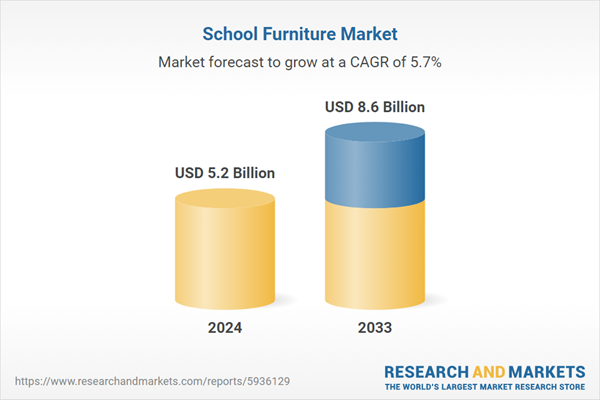
Overall, the school furniture market is poised for continued growth, driven by factors like increasing student populations, government support for education, and the evolving needs of modern learning environments.