

Rattan Furniture Construction Details Buyers Often Overlook
Most buyers expect a rattan chair to look good and last for years. The photos show smooth weaving and warm color. Then the container arrives, and one leg wobbles within a month. Pretty surfaces often hide weak construction. That gap between photo and reality costs buyers real money.
Our team builds and ships globally as a wholesale furniture manufacturer Indonesia is known for, which means we see these failures often. They are almost always avoidable, and this guide will show you what to check before you buy.
How Indonesian Rattan Furniture Is Built: Frame, Weave, and Joints
Every rattan piece has three layers. The frame carries the weight. The weave covers the frame and gives the piece its look. The joints hold it all together, and they usually fail first.
Workshops in Cirebon and Yogyakarta follow different traditions. Cirebon factories often focus on large production runs and export orders. Yogyakarta craftsmen lean toward detailed handmade work. Neither is better, but each shapes how a piece is built.
Catalogue photos rarely show any of this. A glossy picture cannot tell you how a chair is bound underneath. That is why we ask suppliers for close photos of the base and the joints.
Below, we cover materials, joints, finishing, and factory QC. You will get inspection points you can use on your next sample.
Natural Rattan vs. Synthetic Fibers: What Holds Up Over Time
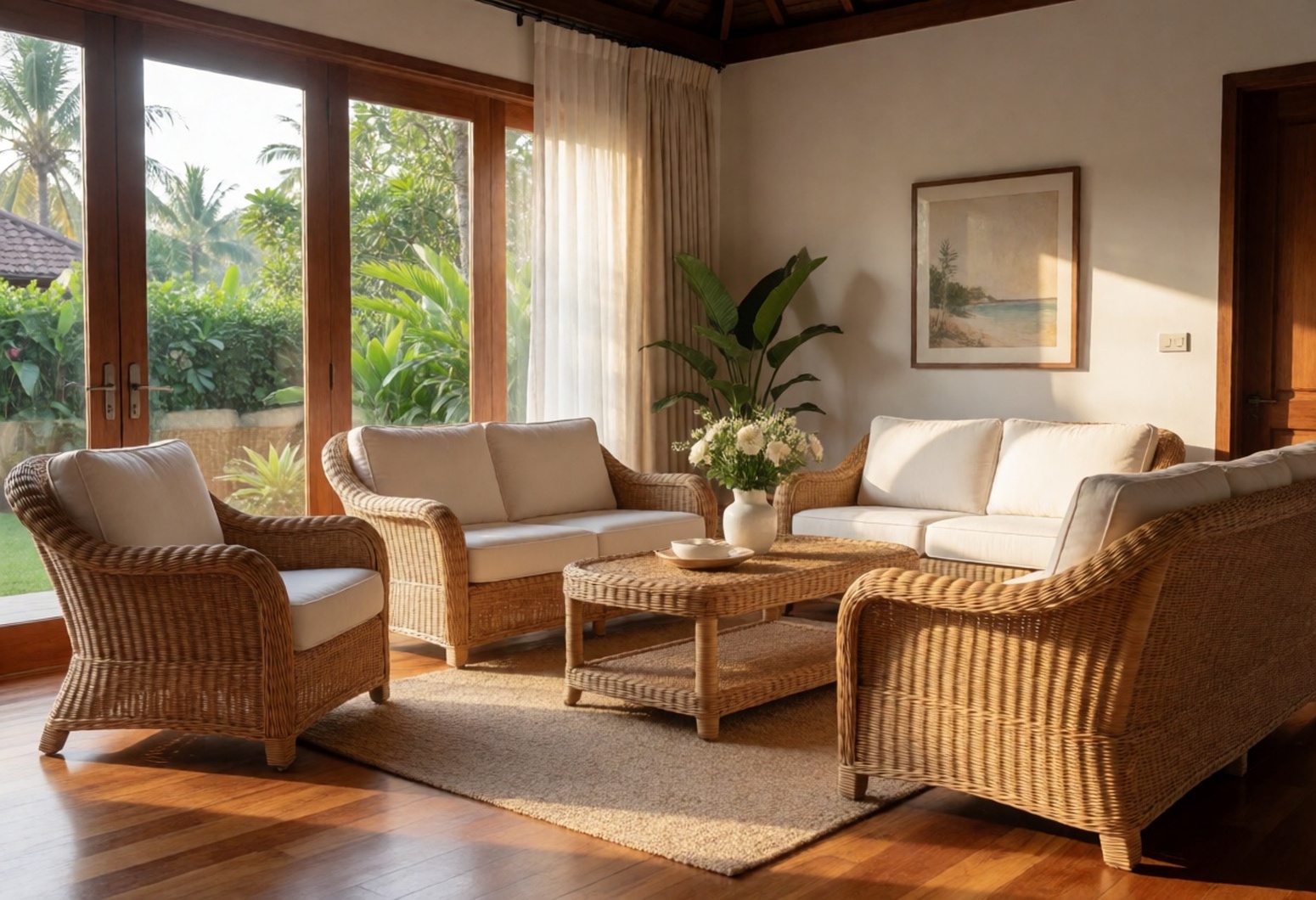
Natural rattan is a vine, and it bends well without breaking. That makes it strong for chairs, sofas, and dining sets used indoors. It also feels light, which helps when you rearrange a room.
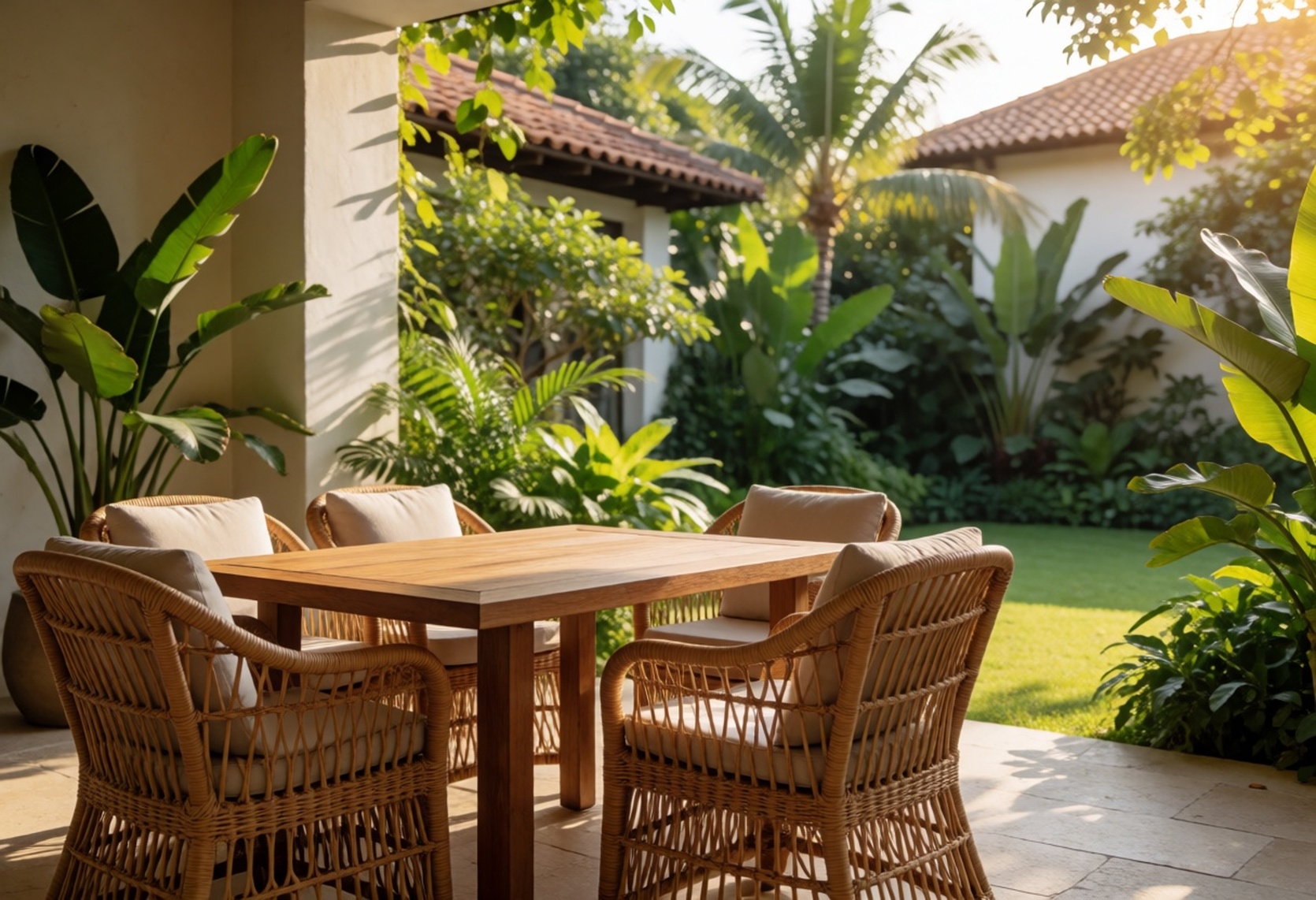
Synthetic fibers resist rain and sun better. They suit a terrace, a courtyard, or a hotel pool deck. Still, they lack the warm feel of natural cane, and some look like plastic up close.
Some buyers compare rattan with teak wood furniture for outdoor use. Teak is heavier and handles rain well, but it costs more and feels very different. Rattan wins on comfort, weight, and a relaxed look.
Be careful with eco claims. Natural rattan is renewable, but treatment matters. Ask what varnish, glue, and fibers were used, and where the material came from.
Price follows material too. Natural pieces take more hand work, while synthetic weaving is faster. A very low price often means thin poles or a weak base.
Frame Material and Joint Construction
Frames use rattan poles, solid wood, or timber, and many pieces mix them. A dining chair may have a wood base with rattan framing above. That works well when the joints are done right.
Look at pole thickness first. Thin poles bend under weight. Stress gathers at the seat base, the armrests, and the chair legs, so those spots need extra support.
Next, check how the joints are tied. Good makers bind them with rattan peel and add glue or dowels. Cheaper pieces rely on nails or staples, which loosen as the rattan dries.
A simple test helps. Sit on a sample, shift your weight, and listen for creaks. Quiet joints usually mean solid work.
Weaving Quality and Surface Finish
Handmade weaving should look even. Check that the tension stays consistent, the pattern ends are tight, and no loose fibers stick out. The best rattan furniture Indonesia produces shows this care on the back and underside too.
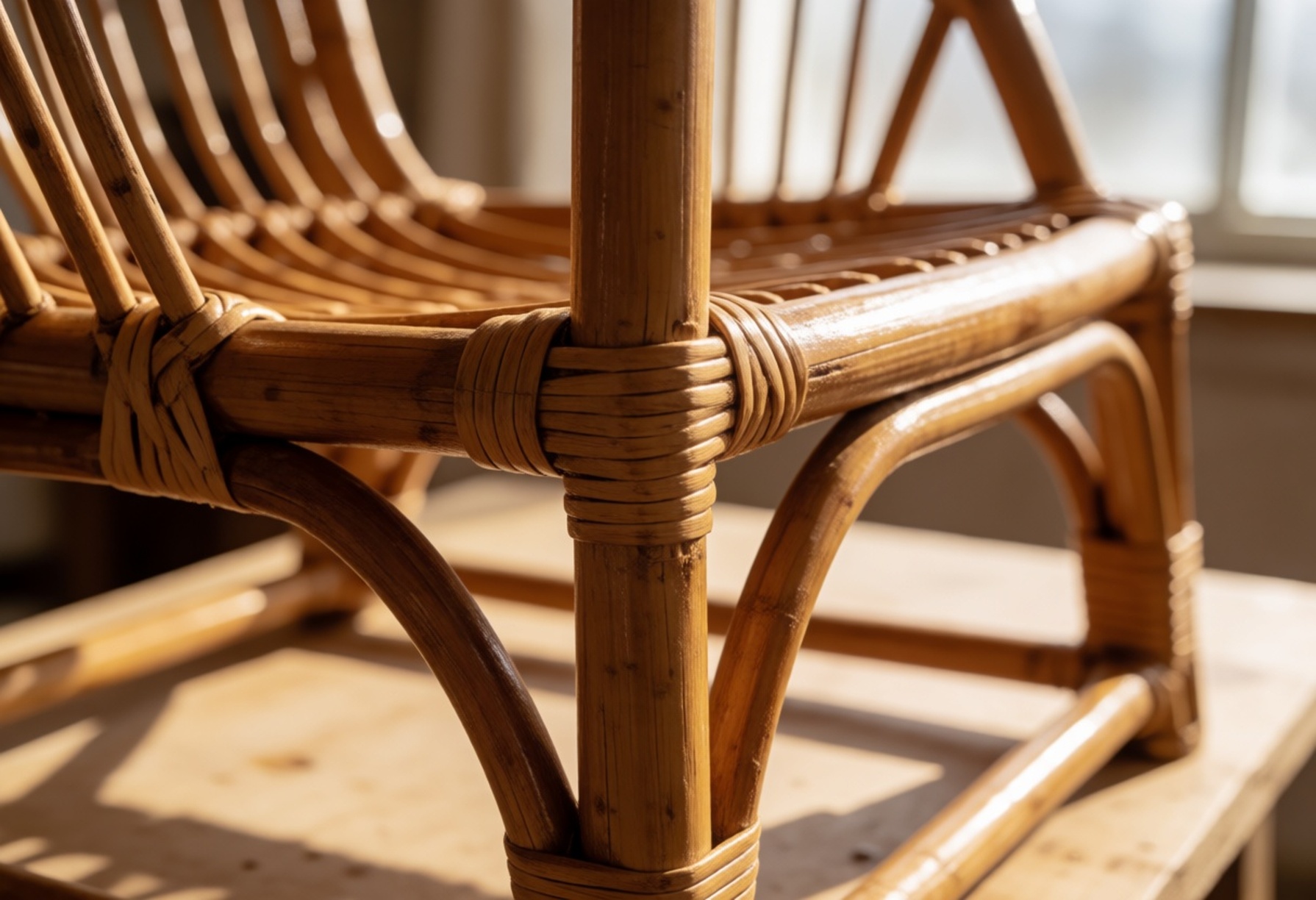
Now think about the finish. Varnish and sealer protect against humidity, which matters in tropical climates. A glossy coat protects more, while a matte natural look feels softer but needs more care.
Each finish ages differently. Gloss can yellow over time, and matte can darken. Tell your customers what to expect, especially for hotel or villa projects.
Checking Manufacturer QC Before You Place Wholesale Orders
Strong QC starts before production. Ask for a sample, then approve it in writing. A reliable manufacturer will agree and keep that sample as the standard.
Request a factory audit or a live video walkthrough. Watch how the staff handle drying, weaving, and packing. Moisture control before loading is key, because damp rattan can grow mold inside a sealed container.
Retailers and resellers need consistency across a full run. Ask about size tolerance on custom or OEM designs. Then list every detail in your furniture specifications, because even a small gap can ruin a matching dining set.
Also ask for documents. Request proof of legal material sourcing, recent quality reports, and packing details. Clear paperwork shows a business that stands behind its work.
These signs can help you decide:
- Green flag: clear specs, written sample approval, and open factory access.
- Green flag: fast replies and real support after delivery.
- Red flag: a price far below market and no sample policy.
- Red flag: vague material notes and no container loading standards.
Construction details decide whether a piece lasts five years or five months. When you buy rattan furniture Indonesia workshops make, inspect the joints, the weave, and the finish. Those three checks protect your margin and your reputation.
If you want help reviewing a sample or planning a custom order, our team is happy to talk it through. Contact us today to discuss your project with a custom furniture manufacturer Indonesia buyers can rely on.