
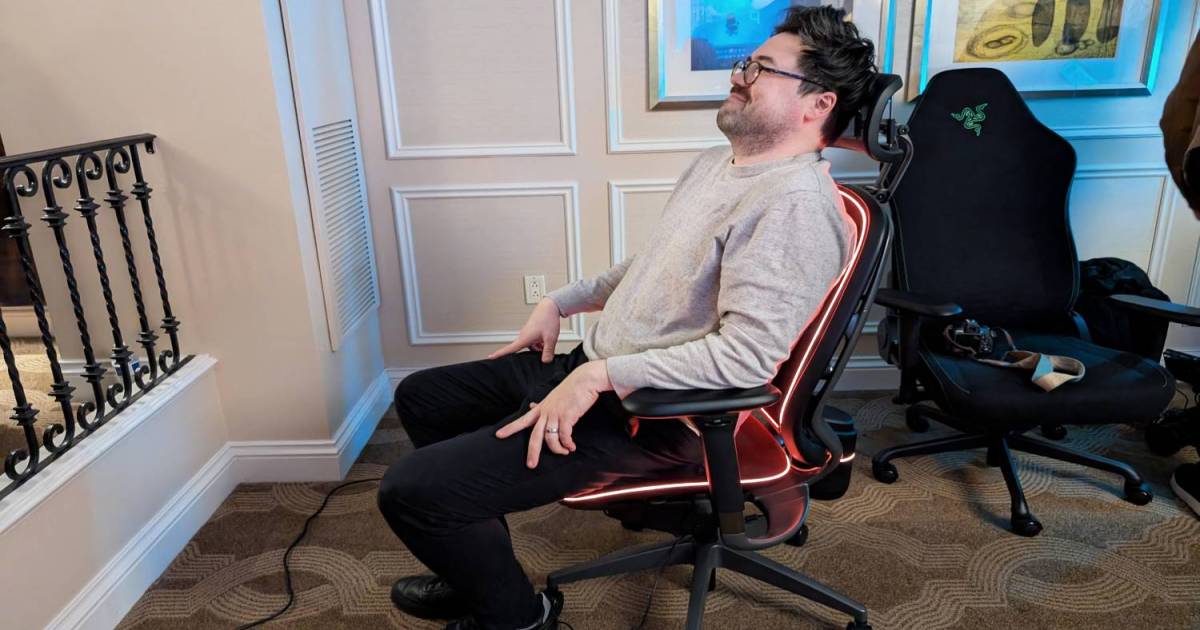
Razer's Project Arielle: A Heating Gaming Chair Experience
I Tried Razer's Project Arielle, a Concept for the Future of Haptic Feedback
Razer's Project Arielle is a fascinating glimpse into what could be next for haptic feedback in gaming. It takes the concept of immersive feedback beyond the typical rumble in your controller, transforming your chair into a full-body extension of the on-screen action. Imagine feeling the rumble of an engine, the impact of an explosion, or the subtle tension of a drawn bowstring, all through the chair you're sitting in.
The chair itself is striking, a modified Razer Iskur with a built-in haptic module developed by Subpac. This module translates in-game audio into vibrations, delivering a tangible sense of presence. It connects wirelessly to a PC or console, processing audio in real-time to create a synchronized haptic experience. The chair also features Chroma RGB lighting integration for visual immersion.
During my hands-on time with the prototype, the experience was notably impressive. Playing a racing game, I could feel the subtle changes in road texture and the g-forces during sharp turns. In a first-person shooter, explosions resonated through the chair, adding a powerful physical dimension to the firefights. The haptic feedback was more nuanced than simple rumble, allowing me to perceive directional cues like the direction of approaching footsteps.
However, it's important to remember that Project Arielle is still a concept. While the technology holds immense promise, there are some hurdles to overcome. The intensity of the haptic feedback can be overwhelming at times, and fine-tuning the responsiveness for different game genres will be crucial. The current prototype's reliance on audio for haptic translation also presents limitations, particularly in games with complex sound design.
Despite these challenges, Razer's vision for a more immersive gaming experience is compelling. Project Arielle demonstrates the potential of haptic technology to transform how we interact with games, moving beyond visual and auditory stimulation to engage our sense of touch. Whether it makes it to market in its current form remains to be seen, but it undeniably represents an exciting direction for the future of gaming.
Razer sees Project Arielle as more than just a gaming chair, envisioning its application extending to movies and music. This broader entertainment focus underscores the versatility of the haptic technology and its potential to enrich various forms of media consumption. Imagine feeling the rhythm of your favorite music or the impact of a cinematic explosion – the possibilities are intriguing.


