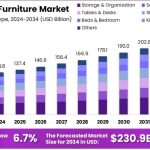
The global office furniture market is projected to reach a value of $183.5 billion by 2032, driven by industry giants like Herman Miller, Steelcase, and HNI Corporation. Factors fueling this growth include the increasing adoption of hybrid work models, a focus on ergonomic design, and the integration of technology into workspaces. Rising demand for modular and adaptable furniture solutions is also contributing to market expansion, as businesses seek to create flexible and collaborative environments.
The global screen cleaner market is expected to witness significant growth, driven by the increasing prevalence of digital devices like smartphones, tablets, laptops, and TVs. The rising awareness about hygiene and the need to maintain clean screens for optimal viewing experience are also contributing factors. Furthermore, the growing adoption of touchscreens in various applications, including ATMs, POS terminals, and interactive kiosks, is further fueling market expansion. Innovations in screen cleaner formulations, such as eco-friendly and anti-bacterial solutions, are also expected to boost market growth.
The global luxury furniture market is expected to witness substantial growth between 2023 and 2025, driven by increasing disposable incomes, a burgeoning affluent population, and the rising demand for premium interior design. Factors such as rapid urbanization and the growing popularity of smart homes are also contributing to market expansion. Key players in the industry are focusing on innovative designs, incorporating sustainable materials, and expanding their online presence to cater to evolving consumer preferences. North America and Europe currently dominate the market, while the Asia Pacific region is projected to experience the fastest growth during the forecast period.
The DIY furniture market is experiencing significant growth, driven by factors like rising disposable incomes, increasing urbanization, and the growing popularity of home improvement projects. Ready-to-assemble (RTA) furniture dominates the market, favored for its affordability, ease of assembly, and diverse designs. Online retail channels are increasingly important for DIY furniture sales, offering convenience and broader product selections. However, the market faces challenges such as fluctuating raw material prices and logistical complexities, particularly concerning last-mile delivery. Despite these challenges, the future outlook for the DIY furniture market remains positive, with anticipated expansion across various regions and product categories.
The global ergonomic furniture market is projected to experience substantial growth, with estimates indicating a rise from US$48.01 billion in 2022 to US$87.98 billion by 2028. This expansion is driven by a growing awareness of musculoskeletal disorders (MSDs) and the increasing adoption of remote work and hybrid work models. Factors such as the expanding elderly population, rising healthcare costs, and government initiatives promoting workplace safety are also contributing to market growth. Technological advancements in ergonomic furniture design, including features like adjustable height, lumbar support, and tilt mechanisms, are further fueling market demand.